

How ERP Companies in Oman Can Help Businesses Improve Order-to-Cash Visibility
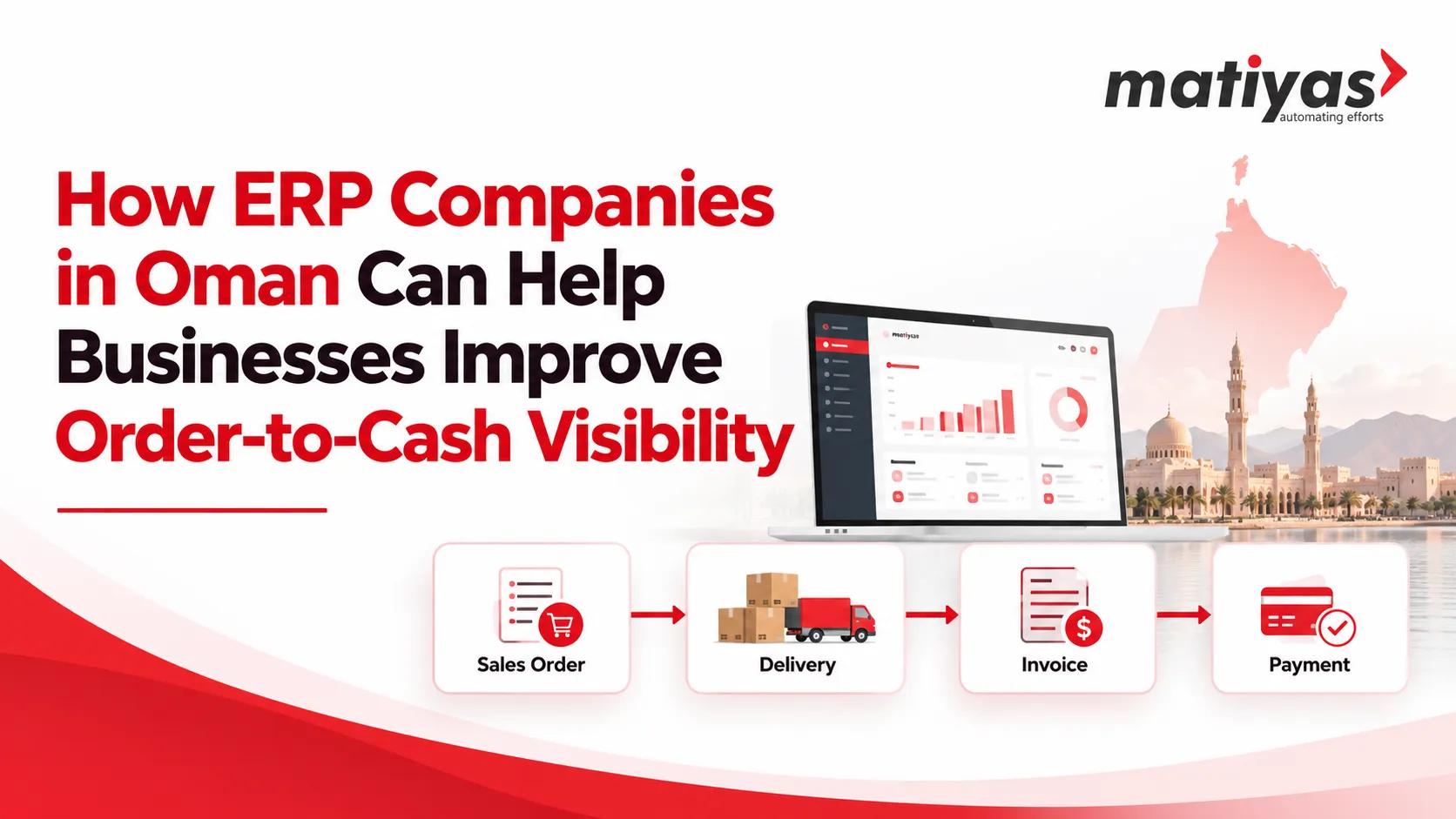
A customer places an order, the warehouse prepares the goods, finance issues an invoice, and the accounts team waits for payment. When these activities are managed through separate spreadsheets, emails, and accounting applications, businesses can struggle to identify where delays occur.
For businesses in Oman operating in manufacturing, wholesale distribution, trading, retail, and services, visibility across the order-to-cash process is essential. Confirming a sale does not mean the business has received payment. Orders must be fulfilled, invoices must be issued accurately, and outstanding amounts must be collected.
Working with suitable ERP companies in Oman can help businesses connect sales, inventory, delivery, invoicing, and payment tracking through an integrated ERP system. This gives management a clearer view of order progress, outstanding receivables, and activities requiring attention.
What Is Order-to-Cash Visibility?
Order-to-cash (O2C) is the complete business process that begins when a customer places an order and ends when the corresponding payment is received and recorded.
The process typically includes:
Customer order confirmation
Inventory checking and order fulfilment
Delivery or service completion
Sales invoicing
Payment follow-up and collection
Payment allocation and reconciliation
Order-to-cash visibility means being able to monitor these stages using reliable, connected information. Sales managers can identify orders awaiting fulfilment, warehouse teams can track outstanding quantities, and finance managers can identify invoices awaiting payment.
An ERP system connects these activities so employees can access consistent transaction information instead of maintaining separate departmental records.
Why Order-to-Cash Visibility Matters for Businesses in Oman
Businesses in Oman may supply customers across multiple locations, manage several warehouses, offer credit terms, or coordinate complex deliveries. As operations expand, manually tracking every order becomes increasingly difficult.
Better coordination between sales and inventory
When sales representatives cannot access accurate stock information, they may confirm delivery dates that the warehouse cannot meet. An integrated ERP system helps teams review stock availability, identify shortages, and coordinate fulfilment before dispatch.
Faster and more accurate invoicing
If delivery information does not reach finance promptly, invoices may be delayed or contain incorrect quantities. Connecting delivery records with sales invoicing helps finance teams work with the same transaction details as warehouse staff.
Improved receivables management
A business can record substantial sales while still experiencing cash-flow pressure because customers have not paid their invoices. ERP-based receivables reports help management distinguish between confirmed orders, invoiced amounts, overdue balances, and payments received.
For growing businesses, the goal is to understand how commercial activity progresses from a customer commitment to actual cash collection.
How ERP Companies in Oman Improve the Order-to-Cash Process
1. Centralise customer orders
An ERP system records essential order information, including customer details, products, quantities, prices, delivery dates, and payment terms.
Using a shared order record allows sales, warehouse, and finance teams to reference the same information. It also helps businesses identify orders that remain incomplete or require approval.
2. Connect inventory with fulfilment
Before dispatch, employees need to know what stock is available, what has been reserved, and what remains outstanding.
ERP inventory workflows can connect sales orders with warehouse records and, where necessary, purchasing or production planning.
For example, if an Omani distributor receives an order for 500 units but can dispatch only 350, the system should help employees track the delivered quantity and the remaining 150 units. This prevents the outstanding quantity from being overlooked.
3. Connect deliveries with invoicing
Delivery and invoicing should follow a clearly defined workflow. Once goods are dispatched, the corresponding delivery record can support invoice preparation.
Finance teams can review delivered quantities, identify transactions awaiting billing, and investigate discrepancies before issuing invoices.
Service businesses may instead use completed milestones or approved billable work as invoicing triggers. The workflow should reflect the actual customer agreement.
4. Track invoices and customer payments
After an invoice is issued, finance teams need visibility into due dates, outstanding amounts, payment terms, and collection status.
A suitable ERP system can help identify:
Invoices approaching their due dates
Overdue customer balances
Partially paid invoices
Customers with significant outstanding amounts
Payments received but not allocated to invoices
These reports help finance teams prioritise collection activities and investigate discrepancies without relying entirely on separate spreadsheets.
5. Provide management with useful dashboards
A well-designed dashboard should answer practical questions, such as:
Which orders are awaiting fulfilment?
Which deliveries have not been invoiced?
How much money remains outstanding?
Which invoices are overdue?
Which payments require reconciliation?
Management should also distinguish between confirmed order value, invoiced revenue, outstanding receivables, and cash collected. These measures represent different stages of the business process and should not be treated as interchangeable.
Which ERP Modules Support Order-to-Cash Visibility?
The most relevant ERP modules depend on the business model, but several commonly support the process.
Sales Management: Records customer orders, pricing, payment terms, and order status.
Inventory Management: Provides stock availability, reservation information, and outstanding quantities.
Warehouse Management: Supports picking, dispatch, and fulfilment activities.
Accounting and Finance: Manages sales invoices, customer receivables, payment entries, and financial records.
Customer Relationship Management (CRM): Maintains customer information and communication history.
Reporting and Dashboards: Helps management monitor fulfilment delays, billing gaps, and collection priorities.
For manufacturers, production planning may also be necessary. Wholesalers and distributors may place greater emphasis on multiple warehouses, partial deliveries, and customer credit management.
The important factor is how these modules exchange information. Buying separate applications without connecting their workflows may leave the original visibility problem unresolved.
Can ERPNext Support Order-to-Cash Visibility?
ERPNext provides a relevant example of an integrated ERP workflow for managing sales and payments.
A typical goods-sale process can connect the following records:
Sales Order: Records the customer's order.
Delivery Note: Records dispatched goods, where applicable.
Sales Invoice: Records the amount payable by the customer.
Payment Entry: Records the customer's payment.
ERPNext supports linked sales documents, partial deliveries, sales invoicing, payment recording, and outstanding balance tracking. The exact workflow depends on configuration and the type of transaction.
Before implementation, businesses should confirm which functions meet their requirements, which need configuration, and whether additional integrations or custom development are necessary.
How Matiyas Solutions Can Help Businesses in Oman
Matiyas Solutions provides ERP implementation, customisation, integration, and support services to help businesses improve operational processes and connect business information.
For businesses seeking better order-to-cash visibility, Matiyas Solutions can help assess existing workflows and identify where disconnected systems, manual data entry, or unclear responsibilities create delays.
Relevant services include:
ERP implementation: Connecting sales, inventory, delivery, and accounting workflows.
ERPNext customisation: Adapting workflows and reports to business requirements.
System integration: Evaluating how existing applications should exchange transaction information.
Reporting and dashboards: Establishing useful measures for fulfilment, invoicing, and outstanding receivables.
Training and support: Helping employees follow consistent processes and maintain reliable records.
The first step is to assess the current order-to-cash process and determine which improvements require configuration, integration, or changes to existing procedures.
Implementation Considerations
Before deploying an ERP-based order-to-cash workflow, businesses should:
Map existing processes: Document how orders move between sales, warehouse, delivery, and finance.
Clean business data: Review customer records, item codes, pricing, payment terms, and outstanding balances.
Assign responsibilities: Define who approves orders, confirms deliveries, issues invoices, and follows up on overdue accounts.
Configure controls: Establish appropriate approval rules, permissions, and payment reconciliation procedures.
Test realistic scenarios: Include partial deliveries, cancelled orders, credit notes, advance payments, and different payment terms.
Measure performance: Track billing delays, overdue receivables, unallocated payments, and unresolved order exceptions.
A phased implementation may be appropriate for businesses with complex processes or multiple locations. Reliable data and consistent workflows should be established before introducing more advanced automation.
Conclusion
For businesses evaluating ERP companies in Oman, order-to-cash visibility is an important capability because it connects customer commitments with operational fulfilment and payment collection.
An integrated ERP system can help businesses identify orders awaiting delivery, deliveries awaiting invoices, overdue receivables, and payments requiring allocation. It also gives management a more consistent basis for reviewing performance and deciding where action is needed.
Success depends on selecting suitable software, configuring the right workflows, maintaining accurate data, and ensuring employees use the system consistently.
Matiyas Solutions can help businesses explore ERP implementation and customisation options that align with their sales, inventory, and financial processes.